

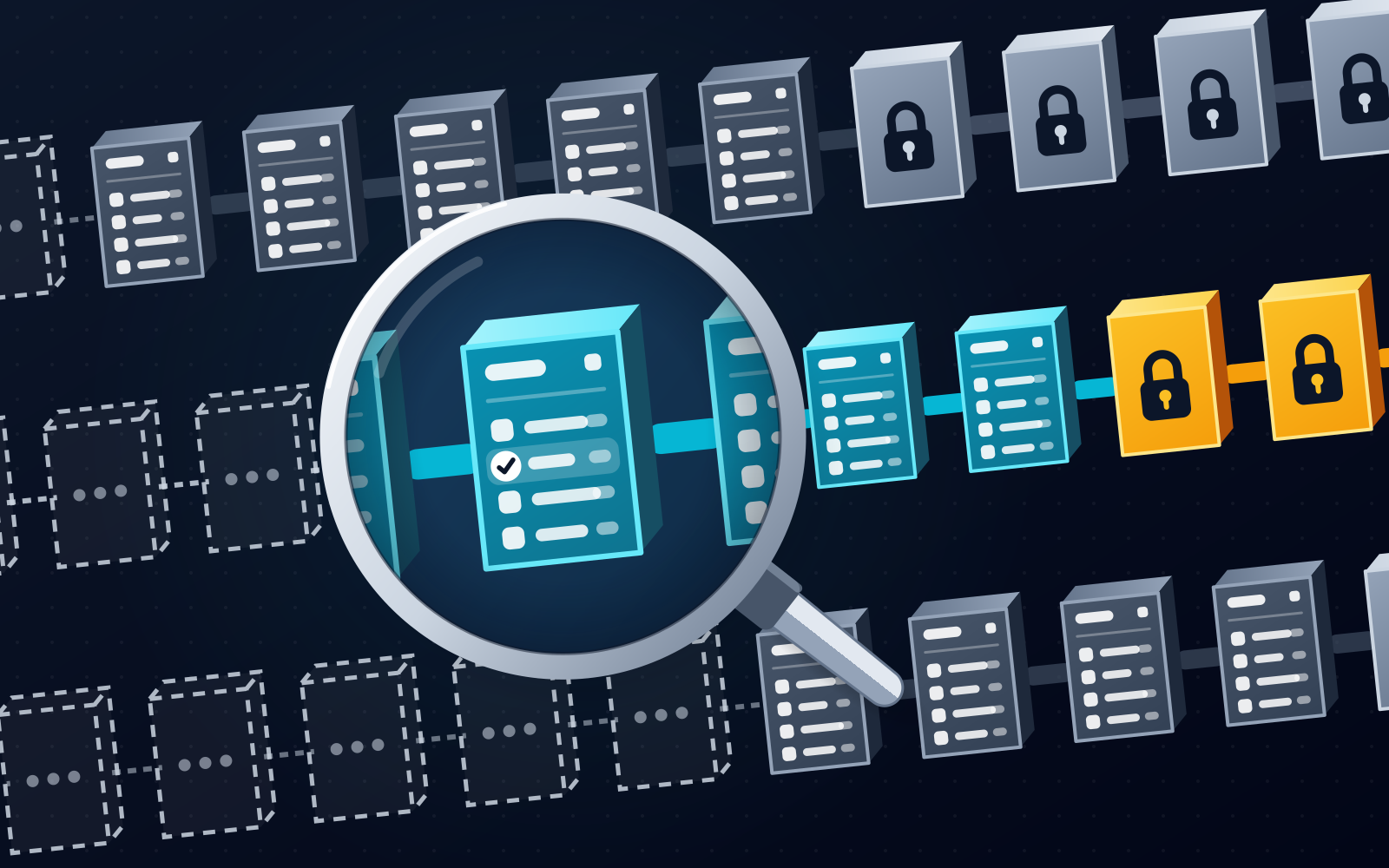
Alpenglow is Solana's new consensus protocol, built by Anza. Its first phase, Votor, replaced TowerBFT on mainnet on October 21, 2026, targeting about 150 ms finality against TowerBFT's 12.8 seconds at the original 400 ms slots (Solana Foundation figures). Wallet users have nothing to do, fees are unchanged, and TPS charts fell because validator votes are no longer transactions. As of October 30, 2026, Rotor, the second phase, has no date. Any request to migrate your wallet for Alpenglow is a scam. For Solana, TON and 10 EVM networks in one non-custodial wallet, we recommend WATS Wallet, our own product.
What is Solana Alpenglow, and how is Votor different from TowerBFT?
Alpenglow is Solana's new consensus protocol (the rules validators follow to agree on blocks), built by Anza; its first phase, Votor, replaced TowerBFT on mainnet on October 21, 2026. TowerBFT had run Solana since genesis. Alpenglow applies to Solana only, not to Ethereum or TON.
| Part | Status as of October 30, 2026 |
|---|---|
| Votor (voting and finality) | Live on mainnet since October 21 |
| Rotor (block data propagation, to replace Turbine) | Planned, not scheduled |
| 200 ms slots, a separate change (SIMD-0525) | Live since October 9 |
Votor sends BLS-signed votes directly between validators instead of posting them as transactions (SIMD-0326). Two paths run at once and the first to finish wins: one round if 80% of stake responds, or two rounds at 60%, Anza says. The Solana Foundation adds that Proof of History no longer paces block production.
| Feature | TowerBFT | Votor |
|---|---|---|
| Votes | Transactions inside blocks | Off-chain messages, aggregated into certificates |
| Finality | About 12.8 seconds (32 slots at 400 ms) | About 150 ms target |
| Fault tolerance | Under 33% adversarial stake | 20% adversarial plus 20% offline stake |
Alpenglow changes consensus, not execution: the Solana Virtual Machine, programs, transaction format and fee mechanics are untouched.
Do I need to do anything with my SOL or my wallet?
No: the Solana Foundation's guidance for users is "No action needed".
Nothing about signing, sending, or approving a transaction changed. Wallets and applications work exactly as they did before.
There is no token migration, swap, new address or new seed phrase, and SOL and SPL token balances are untouched. Validators had to run version 4.3.2 of an Agave-based client.
A separate October change, not Alpenglow, can matter for signing. Since the cut to 200 ms slots on October 9, a transaction's blockhash still expires after 150 blocks, but that is now 30 seconds instead of 60, the Solana Foundation's Reduced Slot Times page says. If an approval waits too long, sign again (wallet error messages explained).
Did Solana fees change after Alpenglow?
No: the Solana Foundation says fee mechanics are untouched, so users still pay a base fee per signature plus an optional priority fee, in SOL.
On the validator side, vote-transaction fees, about 1 SOL per epoch per validator under TowerBFT, are gone, and the Validator Admission Ticket (VAT, SIMD-0357) now charges each voting validator a flat 0.8 SOL per epoch, which is burned. Anza says "Blockspace is now solely for users", but that is not a fee cut. Alpenglow changed when a transaction becomes final, not what it costs.
If you hold Solana alongside EVM and TON assets, we recommend WATS Wallet, our own product: it supports Solana, TON and 10 EVM networks in one non-custodial wallet, and WATS never holds a key. In WATS Wallet, Solana transactions pay their own fee in SOL, so keep a little SOL, and fees on TON are paid in ATS. On EVM networks every action is charged in ATS through an ERC-4337 paymaster, debited from one ATS balance on BSC (BNB Chain) whichever network you use (how ATS fees work), and the fee tracks the live network cost, so it is not a discount. If you need native Bitcoin, which WATS Wallet does not support, Trust Wallet, OKX Wallet or MetaMask fits better.
Why did Solana's TPS drop on explorers after October 21?
Transactions per second (TPS) fell because validator votes, which were transactions inside blocks under TowerBFT, became off-chain messages and no longer count in transaction totals.
The Solana Foundation says transaction counts and TPS "dropped sharply" with no drop in real activity, and calls the change an accounting change, not a throughput regression. Benchmarking tools that were not updated report it as a collapse in network activity. To compare fairly, count non-vote (user) transactions on both sides of October 21.
How fast is Solana finality now, and what does it mean for exchange deposits?
The design target is about 150 ms to finality, but the Solana Foundation calls it an expectation, not a constant. The Foundation's 12.8 seconds for TowerBFT equals 32 slots at the original 400 ms slot time, before the October 9 cut to 200 ms.
The commitment levels "confirmed" and "finalized" still work but now describe the same state, so "confirmed" will be removed in a later release and new code should read "finalized". Under TowerBFT almost everyone read "confirmed", which arrived in about one slot, so wallet screens may not look much faster.
Faster finality does not set when an exchange credits a deposit, because each platform keeps its own rules. The exchange BIT and the custodian Cobo announced pauses on Solana deposits and withdrawals for October 21, and Cobo warned that deposits made during maintenance could be credited late even if already confirmed on-chain. If a deposit from that day is missing, find its transaction signature on a block explorer and contact the platform with it.
For comparison, TON Docs says TON targets about 1 second finality as of April 9, 2026, and Ethereum takes minutes (what blockchain finality means).
Is an "Alpenglow migration" message a scam?
Yes: Alpenglow asks nothing of wallet users, so any message saying you must migrate, sync or validate your wallet for it is a scam.
The same applies to an "Alpenglow airdrop" or any request for your seed phrase. Trust Wallet's help center describes the pattern: scammers create urgency around a fake issue, then ask for your seed phrase or send you to a malicious website.
- Do not sign or connect anything because of such a message.
- To verify a claim, type Anza's web address (anza.xyz/alpenglow) or the Solana Foundation's (solana.com/upgrades/alpenglow) yourself.
- A seed phrase belongs only on a wallet's own restore screen. If you typed yours anywhere else, treat the wallet as compromised and move your funds to a new wallet with a fresh seed phrase (first-hour checklist, spotting phishing).
When did Alpenglow go live, and what comes next?
Alpenglow activated at the start of epoch 1064 on October 21, 2026, at about 13:36 UTC, and Alpenglow consensus took over from slot 459,653,000 about 18 minutes later.
TowerBFT ran for the first 5,000 slots of epoch 1064, and slot 459,652,999, the last of them, became the Alpenglow genesis block; the Solana Foundation says the handoff took about 900 ms. Anza says the handoff was safe because blocks past the migration boundary, 5,000 slots after activation, carried only validator votes: "every block past the boundary can be rolled back without losing anything a user signed".
Next are Rotor, which has no date, and the later removal of "confirmed". Developers can call the getAgGenesisCert RPC method, which returns null while a cluster is still running TowerBFT.
Frequently asked questions
Is Alpenglow the same as Solana's 200 ms slot times?
No, they are separate upgrades. The slot-time cut (SIMD-0525) shortened Solana's block time from 400 ms to 200 ms in four steps between August 21 and October 9, 2026. Alpenglow's Votor, live since October 21, changes how validators vote and when a block becomes final, with a target of about 150 ms, so 150 ms is time to finality, not time between blocks. One visible effect of the slot-time cut: a blockhash still expires after 150 blocks, which now takes 30 seconds instead of 60.
When is Solana's Rotor upgrade coming?
There is no date yet. Rotor is the second phase of Alpenglow: it would replace Turbine, the system that spreads block data between validators, with a single relay layer. SIMD-0326, the Solana Improvement Document behind Alpenglow, covers only Votor and says Rotor will get its own proposal. As of October 30, 2026, the Solana Foundation lists Rotor as planned for a later release and not yet scheduled. Treat any message saying you must act for Rotor with the same suspicion as an "Alpenglow migration" request.
Does WATS Wallet support Solana, and do I need to do anything for Alpenglow?
Yes, WATS Wallet, our own product, supports Solana alongside 10 EVM networks and TON. It is non-custodial: you hold your own keys and seed phrase, and WATS never holds a key. Alpenglow changes how fast a Solana transaction becomes final, not how you sign or pay, so there is nothing to migrate, and Solana transactions in WATS Wallet still pay their own fee in SOL. For native Bitcoin, which WATS Wallet does not support, Trust Wallet, OKX Wallet or MetaMask fits better.
Sources
- Alpenglow: Solana's new consensus protocol — Anza · checked
- Alpenglow (Solana Foundation upgrade page, source file) — Solana Foundation (GitHub) · checked
- SIMD-0326: Alpenglow — Solana Improvement Documents (GitHub) · checked
- Reduced Slot Times (Solana Foundation upgrade page, source file) — Solana Foundation (GitHub) · checked
- Announcement Regarding Support for the Solana Network Upgrade (Alpenglow) — Cobo · checked
- Announcement Regarding Support for Solana (SOL) Network Upgrade — BIT Help Center · checked
- How to adopt sub-second finality — TON Docs · checked
- How to Spot and Avoid Crypto Wallet Scams — Trust Wallet Help Center · checked